
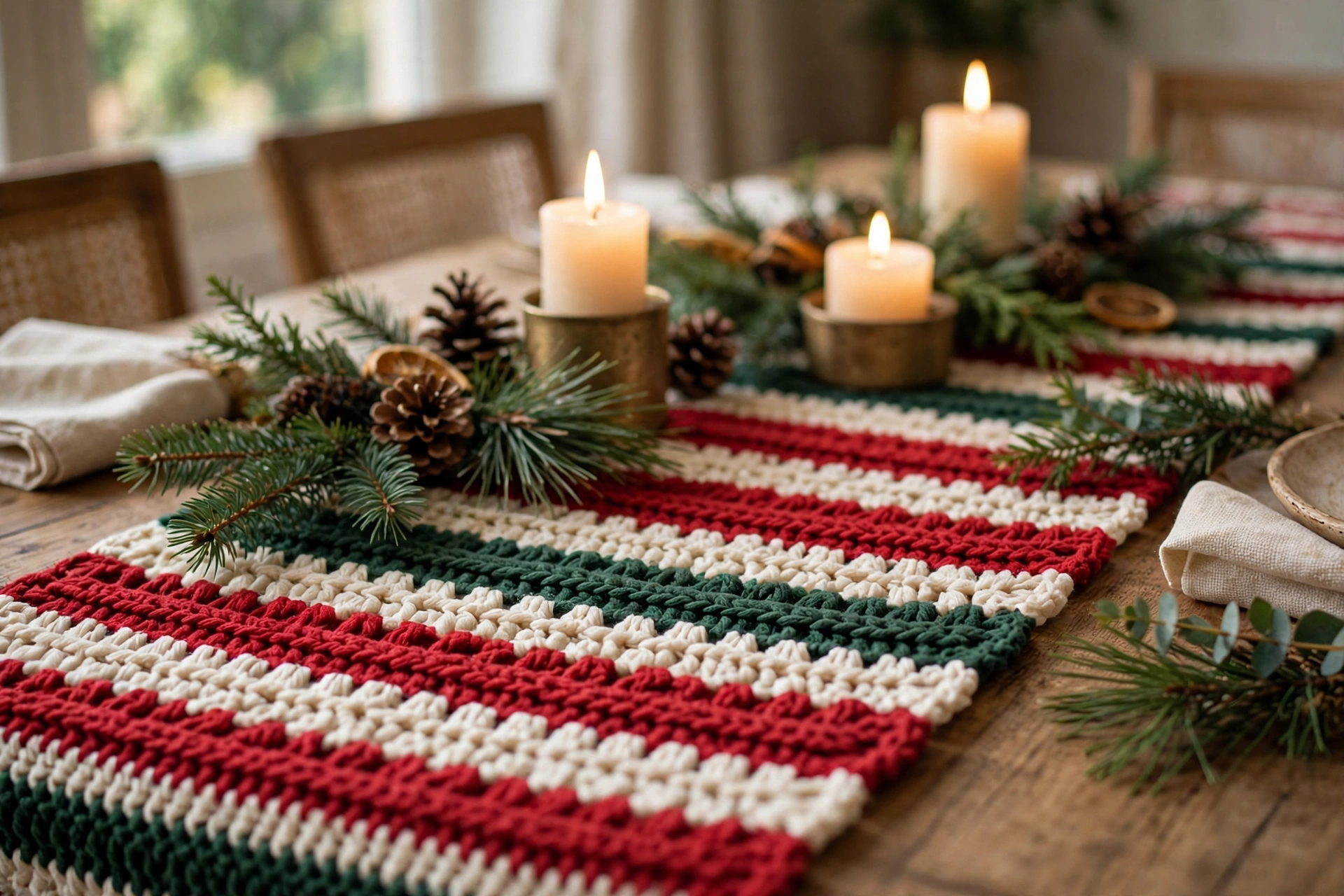
Crochet Christmas Table Runner Pattern — Easy Festive Striped Runner
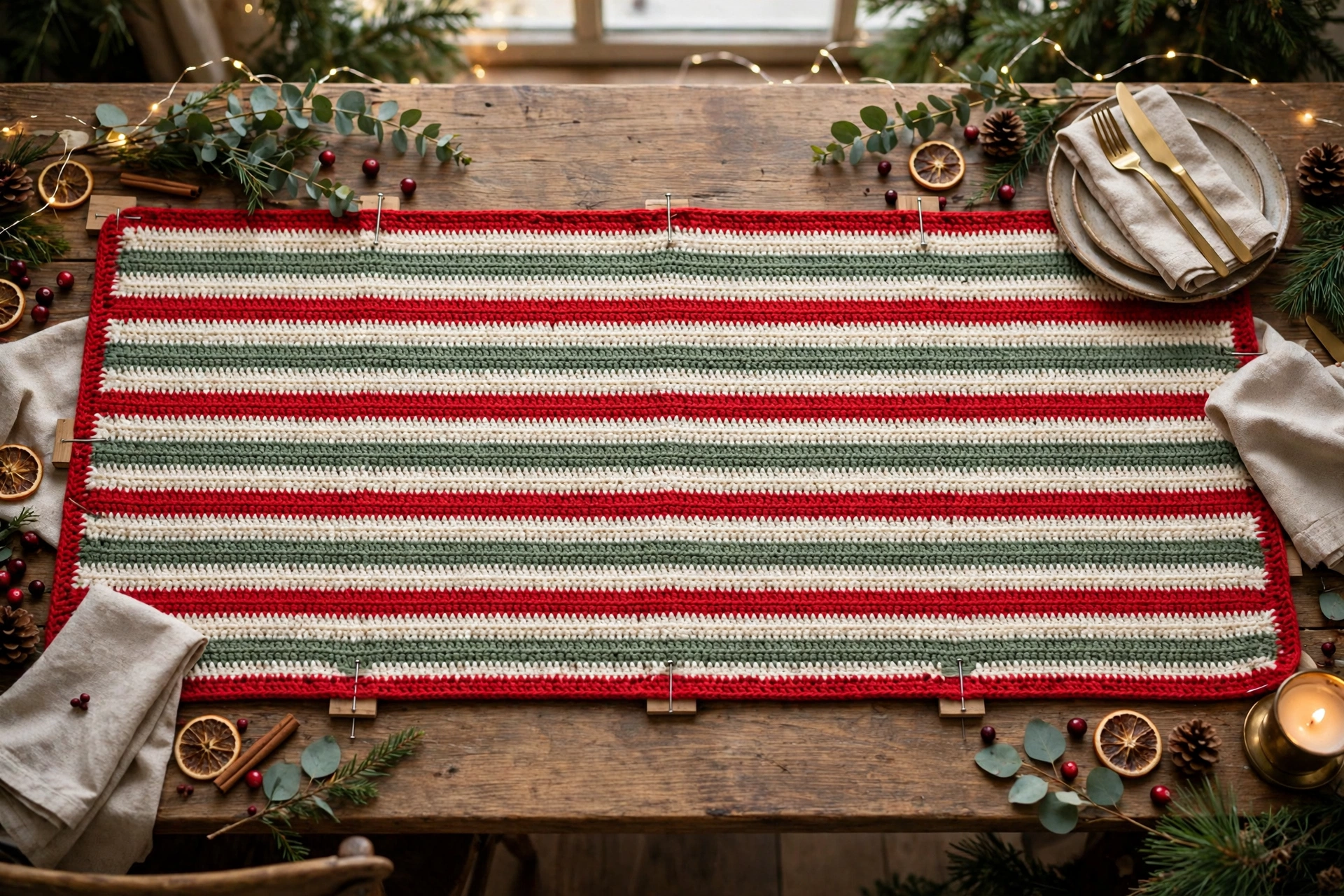
This crochet Christmas table runner is festive, practical, and beginner-friendly. Worked entirely in rows — no working in round, no complicated shaping — it uses one simple repeating stitch: half-double crochet worked in back loop only. That gives soft ribbed texture. Colourwork is simple: wide red stripes, narrow cream stripes, medium green stripes repeat all way along runner. Neat two-round border in green and red frames whole runner. Long enough for standard dining table centrepiece, lies flat, easy to care for if washable yarn chosen.
Materials
Yarn: Worsted weight / medium (#4) yarn, 100% acrylic or cotton-acrylic blend recommended. Colour A — Deep Red: approximately 300 g / about 600 yards (550 m). Colour B — Cream / Off-White: approximately 200 g / about 400 yards (365 m). Colour C — Forest Green: approximately 250 g / about 500 yards (460 m), including border. Amounts approximate, vary with tension and exact yarn. Hook: 5.0 mm (US H-8). Notions: Tapestry needle, scissors, tape measure, stitch markers (optional).
Gauge
13 half-double crochet stitches and 10 rows = 4 inches x 4 inches (10 cm x 10 cm) in back-loop half-double crochet with 5.0 mm hook. Check gauge before start. If runner much wider than stated, go down hook size; if much narrower, go up hook size. Row gauge matters for length.
Finished Size
Approximately 14 inches wide x 48 inches long (35.5 cm x 122 cm) for striped body before border, and approximately 15 inches wide x 49 inches long (38 cm x 124.5 cm) after two-round border. If you want longer runner, add complete 20-row stripe repeats. Do not add partial repeat if you want stripes balanced at both ends.
Abbreviations — US Terms
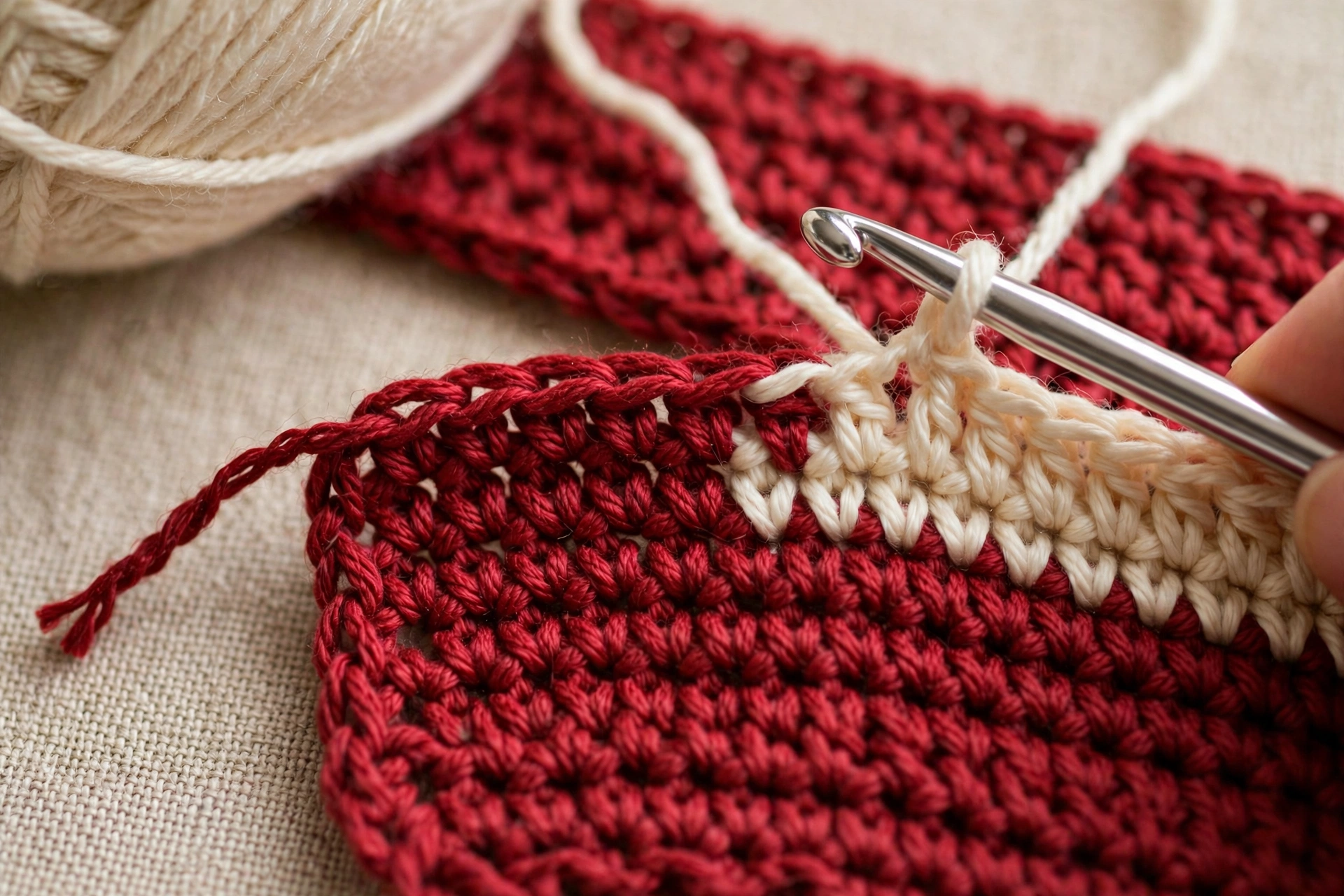
ch — chain; hdc — half-double crochet; sc — single crochet; sl st — slip stitch; st(s) — stitch(es); BLO — back loop only; RS — right side; rep — repeat. Notes: Turning chain (ch 2) at start of each body row does NOT count as stitch. Body rows are worked in half-double crochet in back loop only, except Row 1 worked into foundation chain. To change colour, work last stitch of old colour until last yarn-over, then yarn over with new colour and pull through to complete stitch. Stitch count for body does not change. Every body row has 45 stitches.
Pattern — Foundation
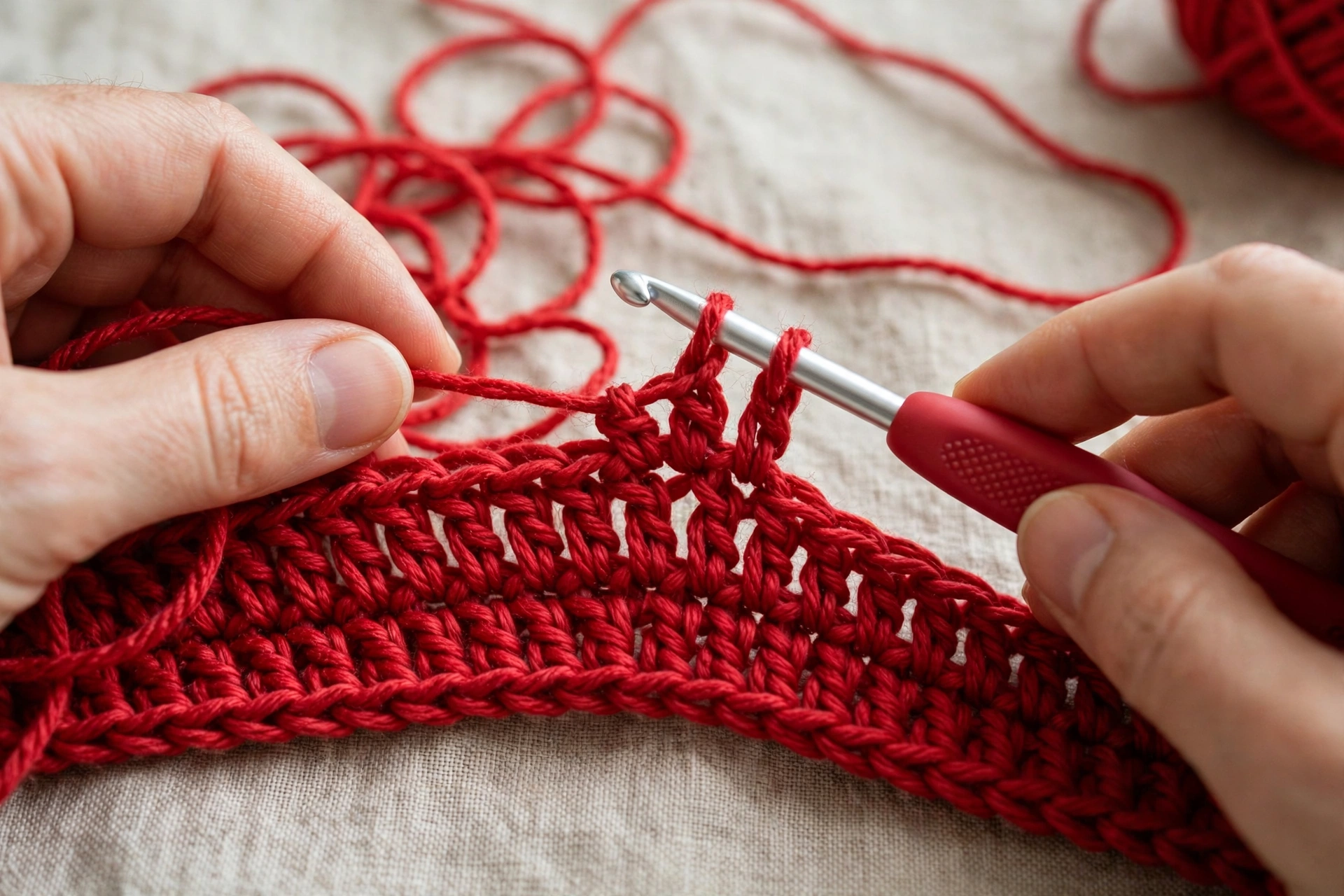
With Colour A (Deep Red), chain 46. Row 1 (RS, Colour A): Hdc in 2nd ch from hook and in each ch across. — 45 hdc. Turn. From now on, work in back loop only.
Stripe Sequence — Rows 1–20
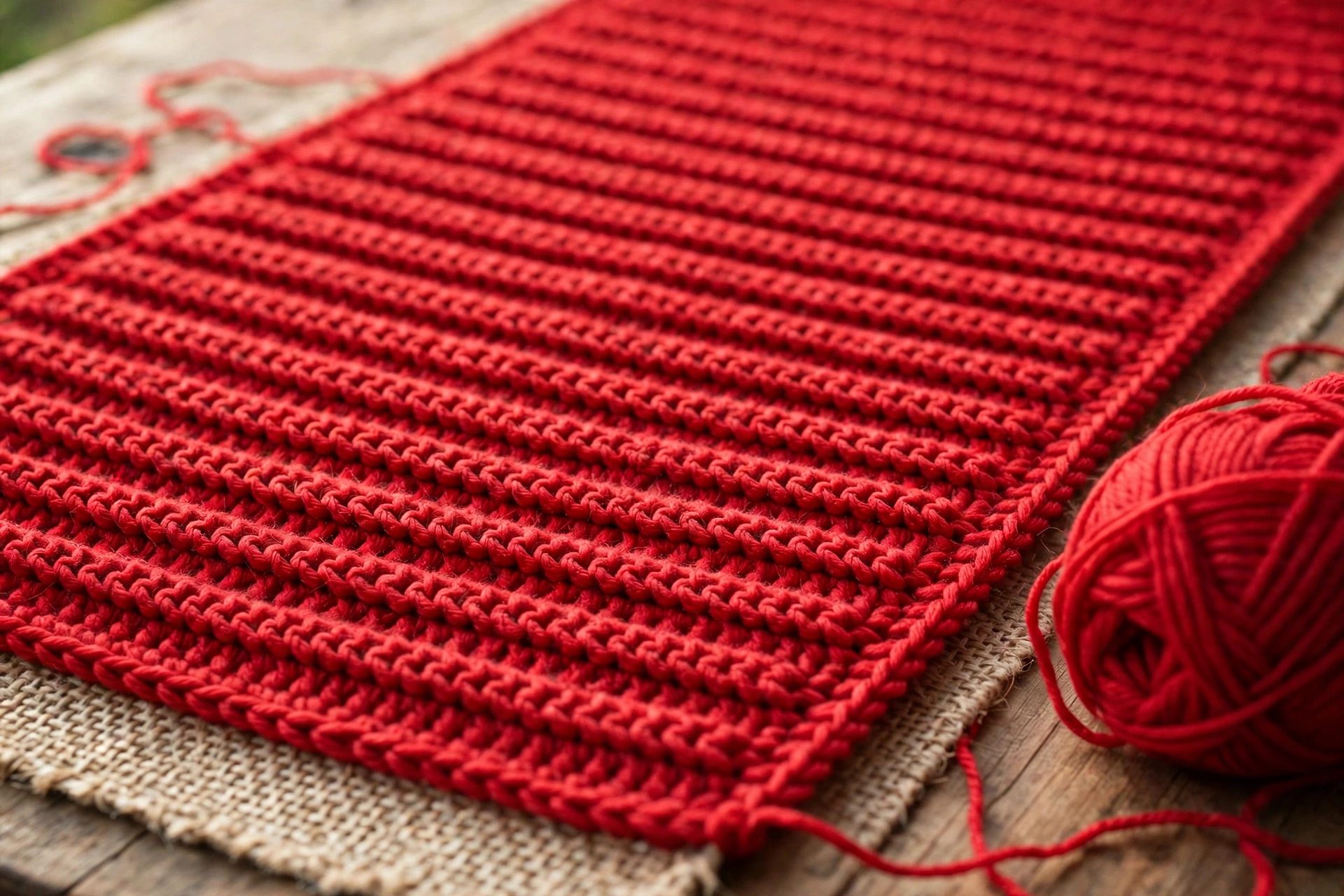
Each row has 45 hdc. Turning chain never counts. Rows 1–10 (Colour A — Deep Red): Ch 2, turn, hdc BLO in each st across. — 45 hdc per row.
Rows 11–12 (Colour B — Cream): Ch 2, turn, hdc BLO in each st across. — 45 hdc per row.
Rows 13–18 (Colour C — Forest Green): Ch 2, turn, hdc BLO in each st across. — 45 hdc per row.
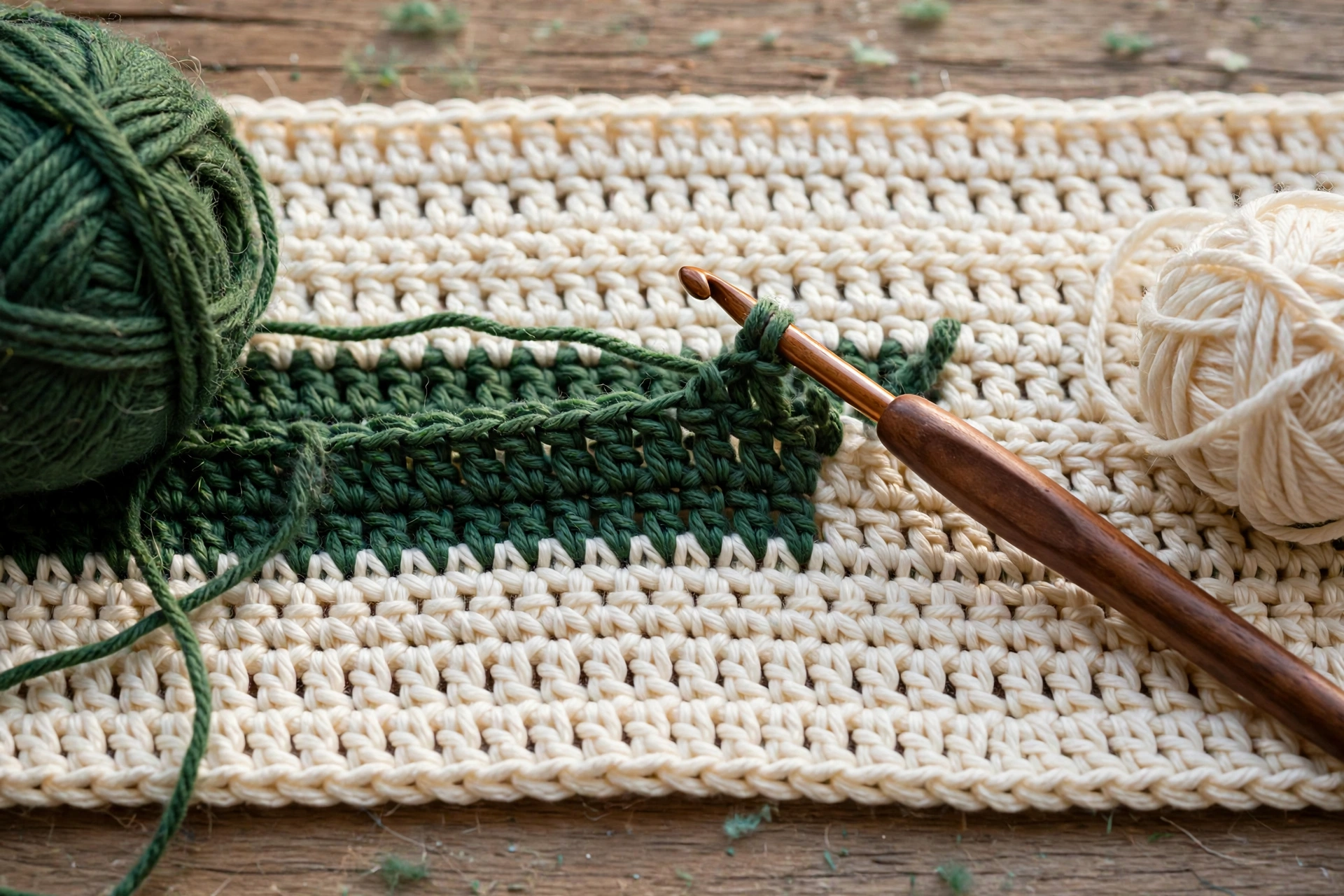
Rows 19–20 (Colour B — Cream): Ch 2, turn, hdc BLO in each st across. — 45 hdc per row. That completes one 20-row stripe repeat: 10 red, 2 cream, 6 green, 2 cream.
Continuing Body
Repeat 20-row stripe sequence 5 more times — work Rows 1–20 above six times total. After Repeat 1: 20 rows; Repeat 2: 40; Repeat 3: 60; Repeat 4: 80; Repeat 5: 100; Repeat 6: 120 rows. Every row throughout body has 45 hdc. No increases or decreases.
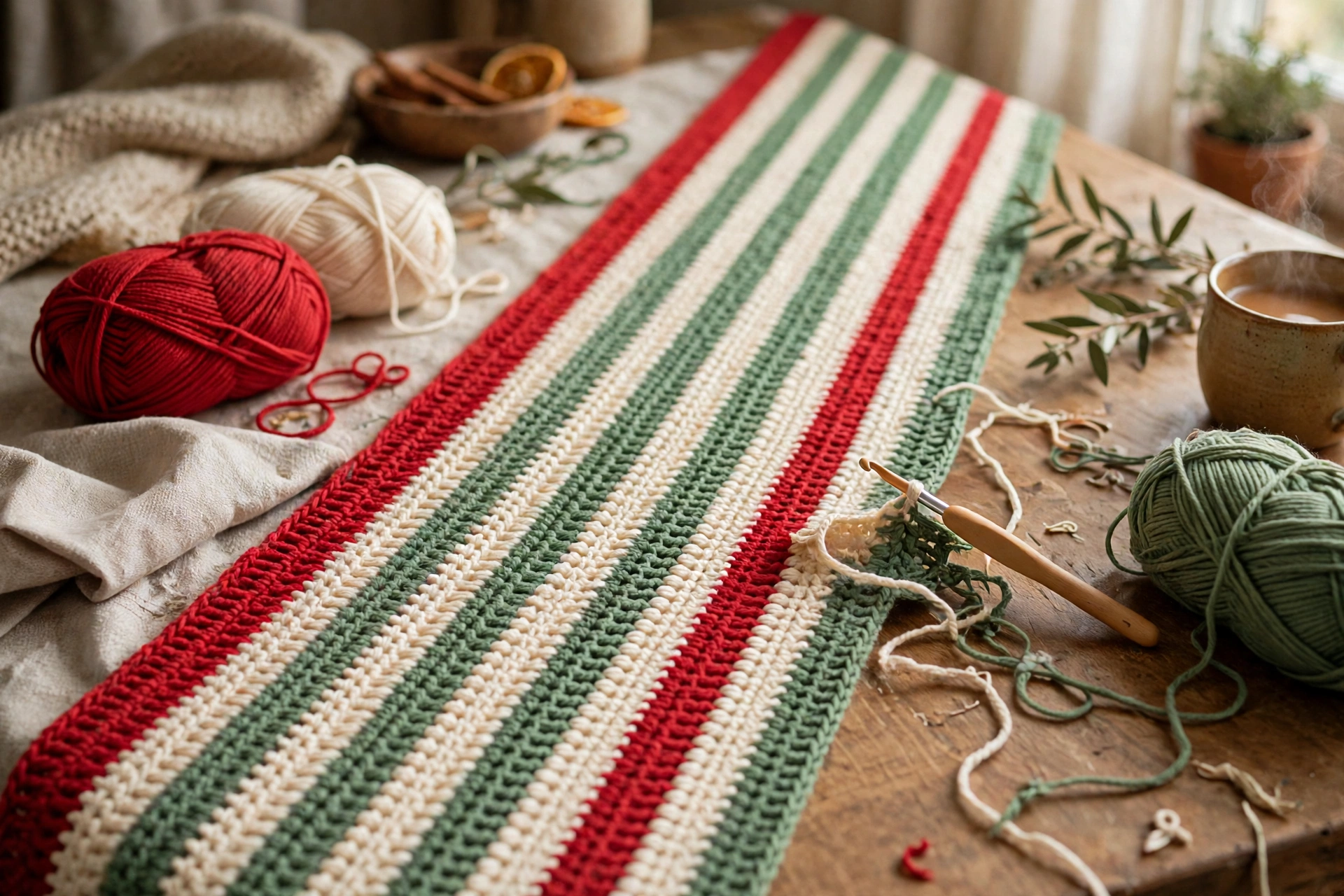
After Row 120, you will have just finished 2 rows of Colour B (Cream). Fasten off Colour B, leaving tail for weaving in. Do not turn. Striped body should measure approximately 14 inches wide x 48 inches long before border.
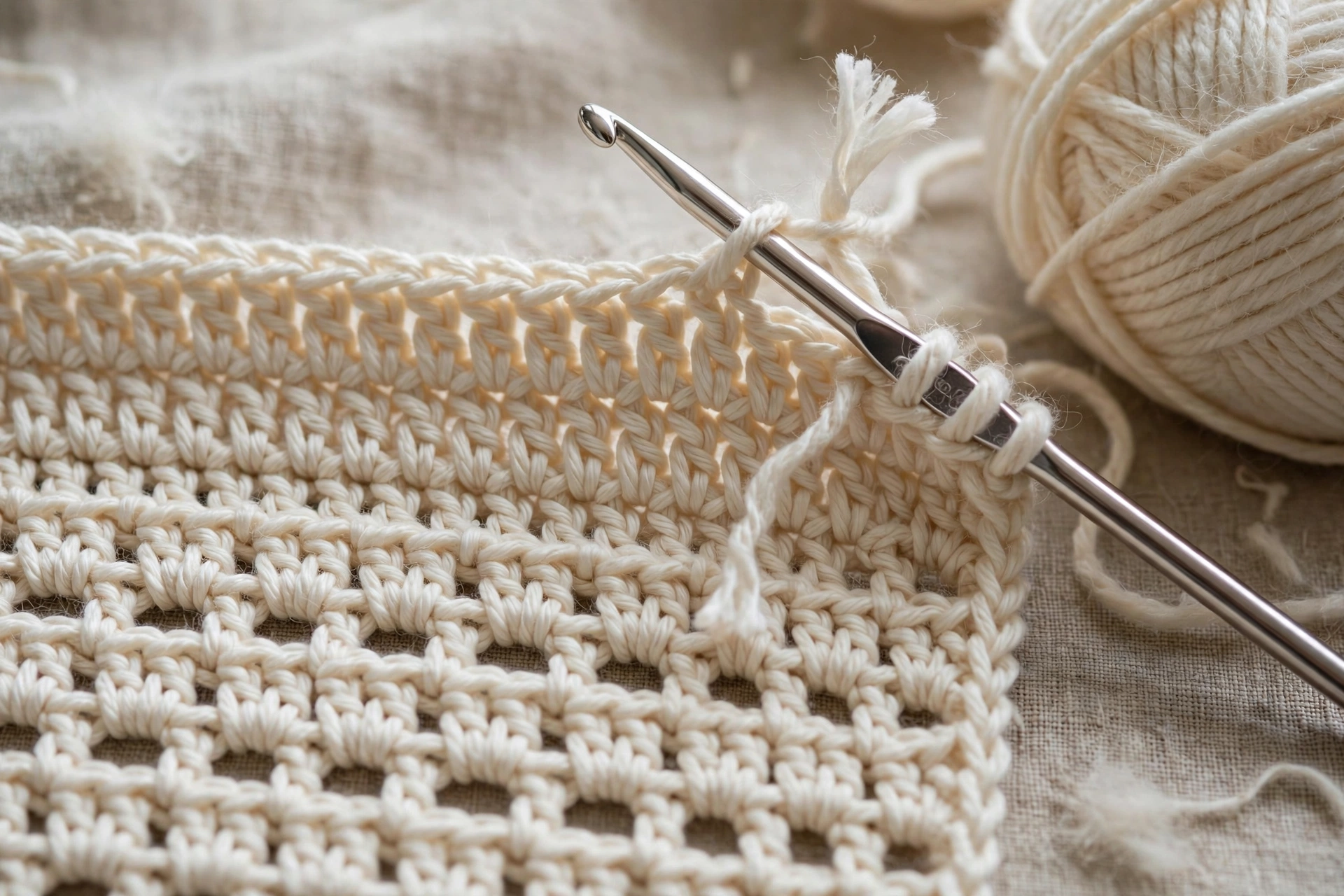
Border — Border Round 1 — Colour C (Forest Green)
Join Colour C with slip stitch in any corner stitch of body. Work around runner: across short end, down long side, across other short end, up other long side. Ch 1 (does not count), 3 sc in same corner stitch, sc in next 43 sts across short end, 3 sc in next corner stitch, sc in next 118 row-ends along long side, 3 sc in next corner stitch, sc in next 43 sts across other short end, 3 sc in next corner stitch, sc in next 118 row-ends along other long side, sl st to first sc to join. — 334 sc. Count: 4 corners x 3 sc = 12, plus 43+43+118+118 = 322, total 334 sc. Fasten off Colour C.
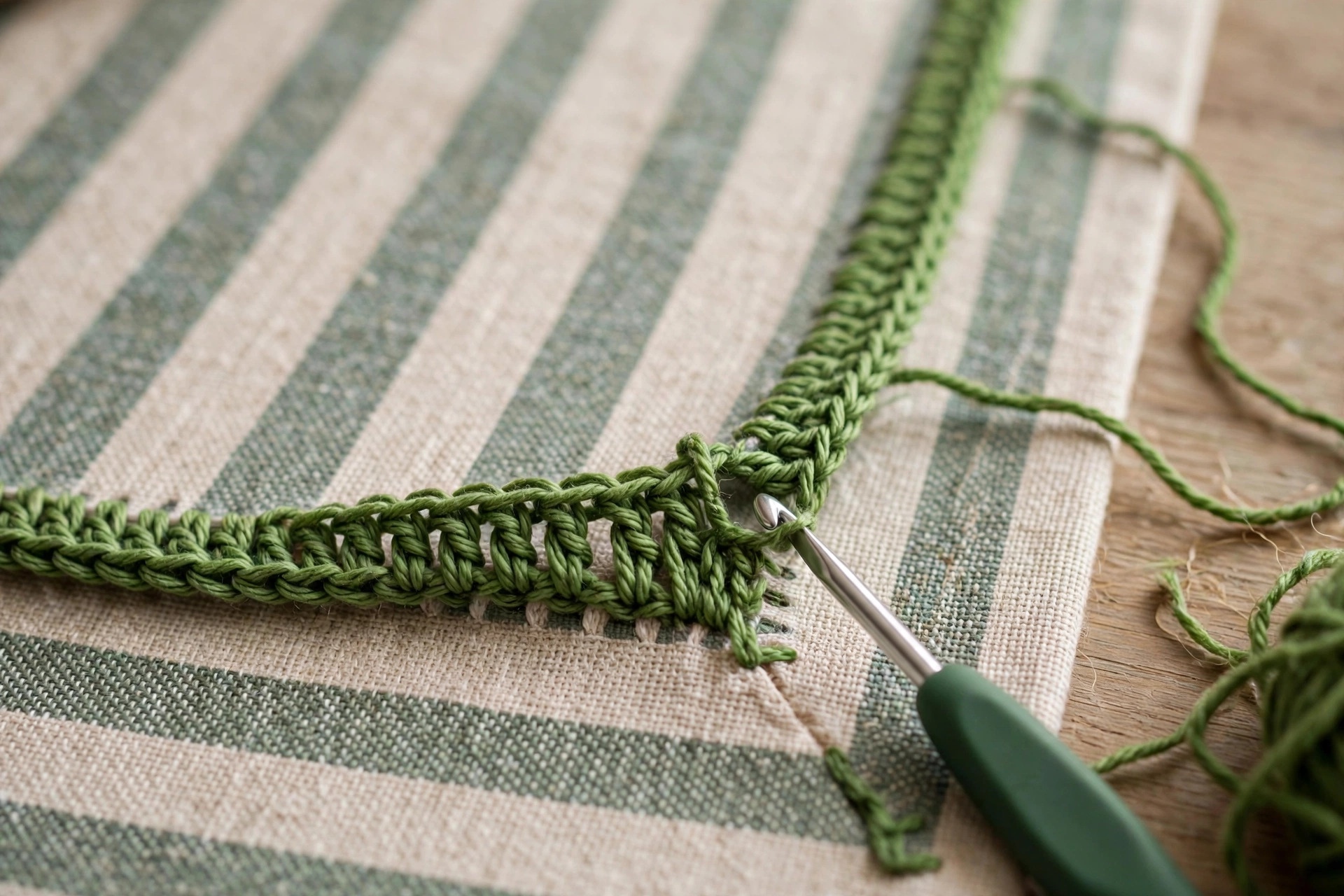
Border Round 2 — Colour A (Deep Red)
Join Colour A with slip stitch in centre sc of any 3-sc corner group from Round 1 (second sc of group). Ch 1 (does not count), 3 sc in same centre corner stitch, sc in next 45 sc to centre of next corner group, 3 sc in that centre corner stitch, sc in next 120 sc to centre of next corner group, 3 sc in that centre corner stitch, sc in next 45 sc to centre of next corner group, 3 sc in that centre corner stitch, sc in next 120 sc to start, sl st to first sc to join. — 342 sc. Count: 4 corners x 3 sc = 12, plus 45+120+45+120 = 330, total 342 sc. Fasten off Colour A.
Finishing / Assembly
No seaming — worked as one piece plus border. 1. Weave in all yarn tails on wrong side with tapestry needle, following direction of stitches, weave each tail at least 2 inches, changing direction once if possible. 2. Check corners: each corner should lie flat with neat point formed by 3-sc group; if corner curls, gently reshape by hand. 3. Block lightly if desired: lay runner flat, mist lightly with water or steam gently per yarn label, shape to approximately 15 x 49 inches, leave flat until completely dry; do not stretch aggressively. 4. Trim remaining tails close only after weaving securely.
Tips
Keep edges straight — count stitches at end of first few rows, stitch marker in first and last stitch helps. Neat colour changes — always change colour on last yarn-over of last stitch in old colour. Tension — even relaxed tension; too tight makes runner stiff and narrower, too loose makes drape more but grow longer. Making longer/shorter — add or remove complete 20-row stripe repeats; each full repeat adds about 8 inches length at stated row gauge; partial repeat leaves stripe pattern unbalanced. Making wider — add stitches in multiples that keep body symmetrical, recalculate border; e.g. 55-stitch-wide body gives 53 stitches on each short end in Border Round 1 instead of 43, and 55 stitches between corner centres in Border Round 2 instead of 45; always recount border before start. Yarn choice — smooth worsted yarn shows ribbed texture best; very fluffy yarn hides back-loop detail. Care — follow yarn label; acrylic runners machine wash gentle and lay flat to dry; cotton wash gently and reshape while damp.
FAQ
Is pattern suitable for beginners? Yes, only chain, half-double crochet, and single crochet, all worked in rows; only skills beyond basic stitches are changing colour at end of row and working simple border in rounds. How long does it take? Depends on speed, most crocheters finish over several relaxed evenings; stitch repeats and simple stripes good project while watching television. Can I use different colours? Absolutely, any three contrasting colours; keep one light colour for narrow stripes (Cream) so red and green stripes stay clearly separated. Can I use different yarn weight? Yes, but finished size and yarn amounts will change; lighter yarn smaller hook narrower shorter runner unless add stitches and rows; bulkier yarn larger runner; always make gauge swatch first. Will runner lie flat? Should, provided tension even and border corners worked as written; light blocking helps sit flat and evens edges. How do I wash? Follow yarn label first; general guide wash gently, avoid high heat, always lay flat to dry so runner keeps rectangular shape.
